Screw-Retained vs Cement-Retained Implant Crowns: How to Choose, From the Lab Bench

Key takeaways
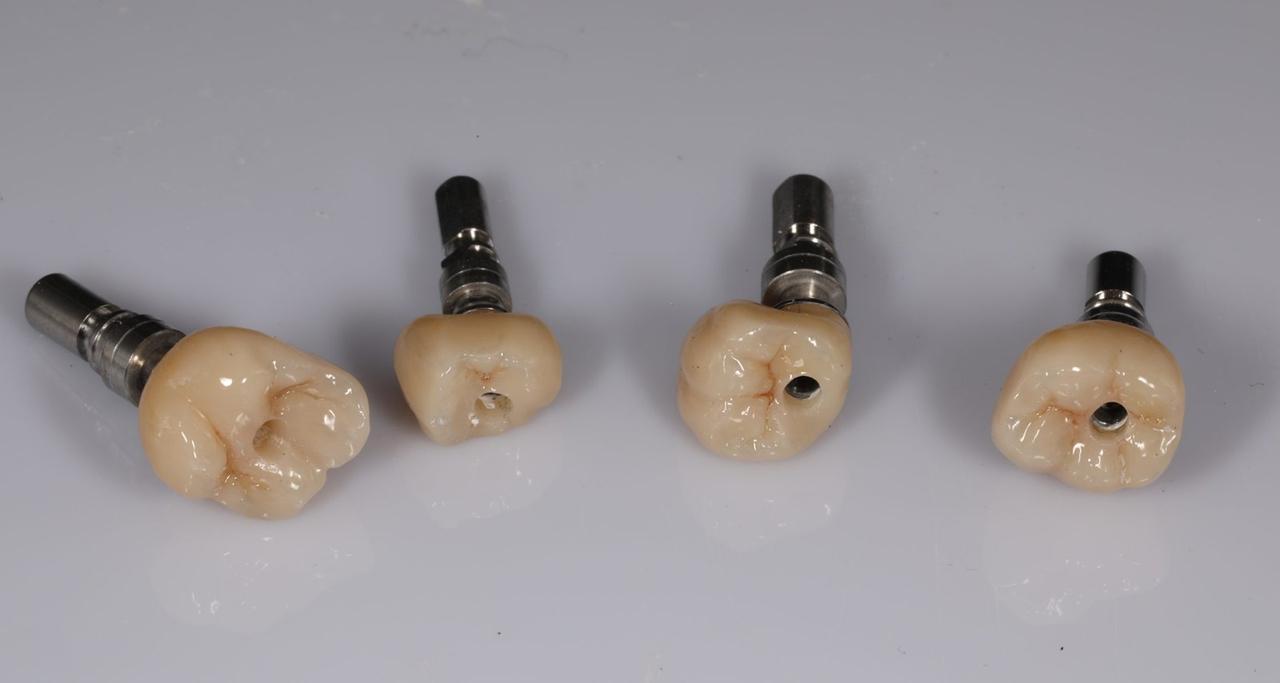
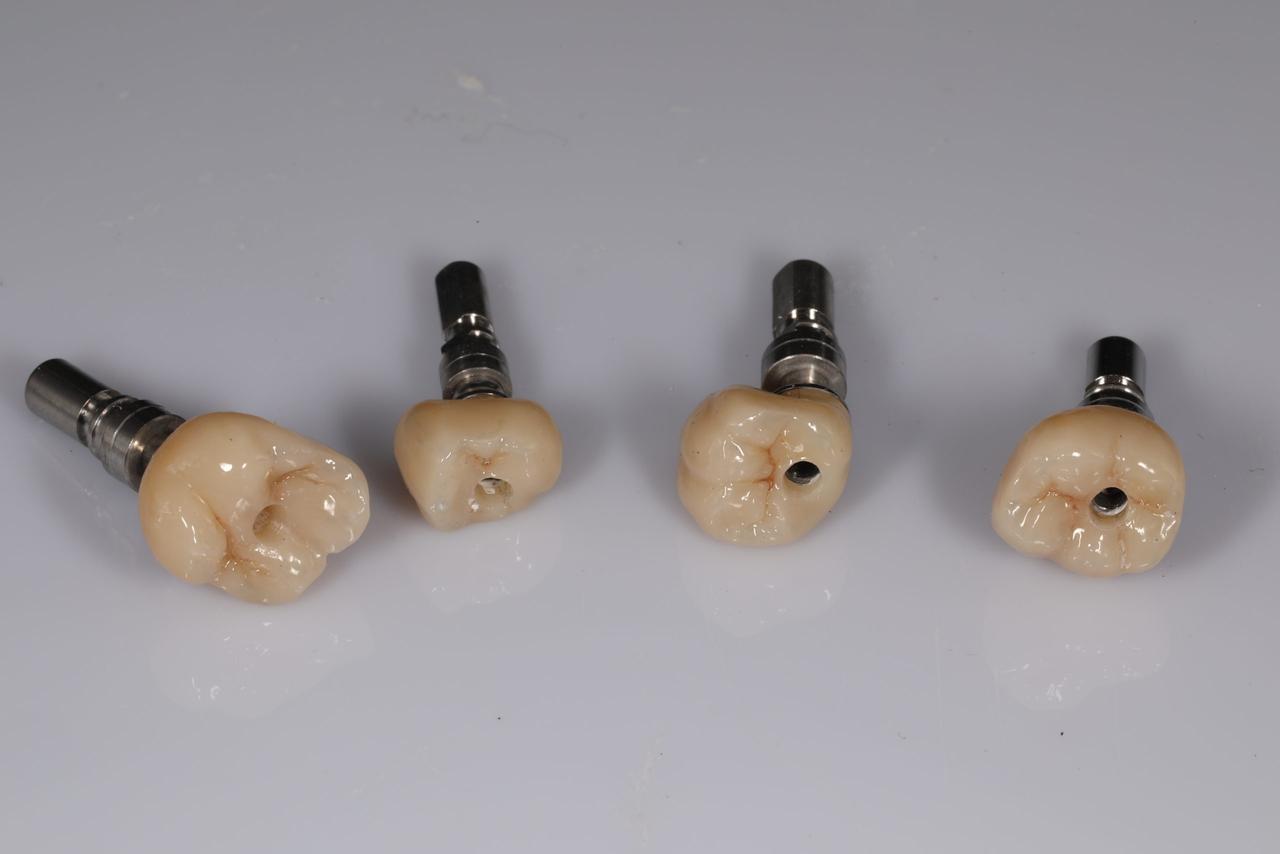
- For a single implant crown, choose screw retention whenever the access channel exits through the occlusal surface or the cingulum. You get a retrievable crown and no cement under the tissue.
- Choose cement retention when the access hole would land on the facial or incisal edge, or when the implant angle cannot be corrected with the abutment.
- Systematic reviews find no meaningful difference in implant survival between the two. The difference is in complications and in what you can fix later.
- Most problems with either design start before the lab sees the case: the wrong scan body, a missing platform size, no tissue information.
The short answer
A screw-retained implant crown is held to the implant by a prosthetic screw through an access channel; a cement-retained crown is cemented onto an abutment. If the screw access comes out where you can hide it, screw retention is the safer default for a single crown: it can be removed without cutting, and there is no excess cement to chase below the margin. If the access would come out through the facial or the incisal edge, a custom abutment with a cemented crown gives you the better result.
That is the rule. The rest of this article is how we apply it on real cases, and what we need from you to make either design fit the first time.
Screw-retained vs cement-retained at a glance
| Question | Screw-retained | Cement-retained |
|---|---|---|
| Can I take it off later? | Yes: open the access, remove the screw. | Only if you used a provisional cement, and even then not always. |
| Excess cement below the margin | None at the chair. | A real risk, and it grows as the margin goes deeper. |
| Esthetics | Depends on where the access exits. Fine on molars, premolars and palatal access in the anterior. | No access hole, so the facial and occlusal surfaces stay intact. |
| Implant angle | Needs a favorable angle for the access to exit on the occlusal or cingulum. | A custom abutment corrects the angle. |
| Short interocclusal space | Works well: retention comes from the screw, not from abutment height. | Needs enough abutment height to hold the crown. |
| Typical complication | Screw loosening, fixed by retightening. | Decementation, or peri-implant inflammation from residual cement. |
| Steps at the seat appointment | Seat, torque, seal the access. | Torque the abutment, cement, clean, X-ray to check for cement. |
When we recommend a screw-retained crown
- Molars and premolars where the access exits through the central fossa. This is most posterior single implants.
- Deep implant placement or a deep margin. The deeper the margin, the harder it is to clean cement out completely.
- Limited space between the implant and the opposing tooth, where a cemented crown would have too little abutment height to stay on.
- Patients with a history of periodontitis or peri-implant problems, where residual cement is a risk you do not want to add.
- Cases you expect to revisit: a patient who grinds, a site next to a tooth with a guarded prognosis, or anything you may need to extend later.
- Anterior implants with palatal access. If the implant is placed so the channel exits through the cingulum, a screw-retained crown is often the cleanest solution in the front too.
When a cement-retained crown still makes sense
- The access would exit through the facial or the incisal edge. In the anterior, a visible composite plug on the facial is not an acceptable result.
- The implant angle is off and the abutment has to correct it. A custom titanium or zirconia abutment lets us put the margin and the emergence where the tissue needs them.
- Occlusion needs an intact surface, for example when the access hole would sit right on a working contact.
If you cement, ask your lab to put the abutment margin no deeper than needed for esthetics, and clean and X-ray at the seat. Many clinicians also use a replica abutment chairside to squeeze out the excess before the crown goes in the mouth.
What the evidence says
Neither design is wrong. A systematic review in the Journal of Prosthodontics (Sherif et al., 2014) pooled 23 studies and found no significant difference in implant survival or crown loss: 0.71 major failures per 100 years for screw-retained and 0.87 for cement-retained restorations. The authors' conclusion: "neither is a form of inferior care."
The difference is in the complications. In a prospective endoscopic study (Wilson, Journal of Periodontology, 2009), excess cement was found in 34 of 42 implants with signs of peri-implant disease and in none of the 20 healthy controls; 30 days after the cement was removed, 25 of the 33 cleaned sites showed no signs of inflammation. A lab study (Linkevicius et al., Clinical Oral Implants Research, 2011) showed that the amount of cement left after cleaning grows as the margin moves deeper below the gum line.
So the choice is less about survival and more about which problem you would rather manage: a screw you can retighten, or cement you have to find.
What your lab needs from you
Most implant crowns that do not fit fail on information, not on ceramics. Before you send a case, check that the lab will have:
- The implant system, the platform and the diameter, written on the prescription, not only in the scan file name.
- The right scan body for that system, fully seated. If you are not sure it seated, take a periapical before you scan.
- A full-arch scan of the opposing arch and a bite, so the contacts and the occlusion are set from the start.
- Soft-tissue information: a scan of the healed emergence profile with the healing abutment removed, or a scan of a shaped provisional.
- Your retention preference, screw or cement, and what you want if the access lands in a bad spot. If you are not sure, ask the lab to look at the scan and tell you before they design.
- Shade and a photo of the neighboring teeth in natural light for anything in the smile zone.
A good lab will call you when something on this list is missing, before it designs the crown, not after.
How we make implant crowns at Grin
"A crown placed on a perfect implant can still fail the patient if the emergence is wrong. I've seen it from the dentist's side. That's why I build every implant restoration starting from the tissue architecture, not just the shade."
Vasyl Hryn, dentist and CDT
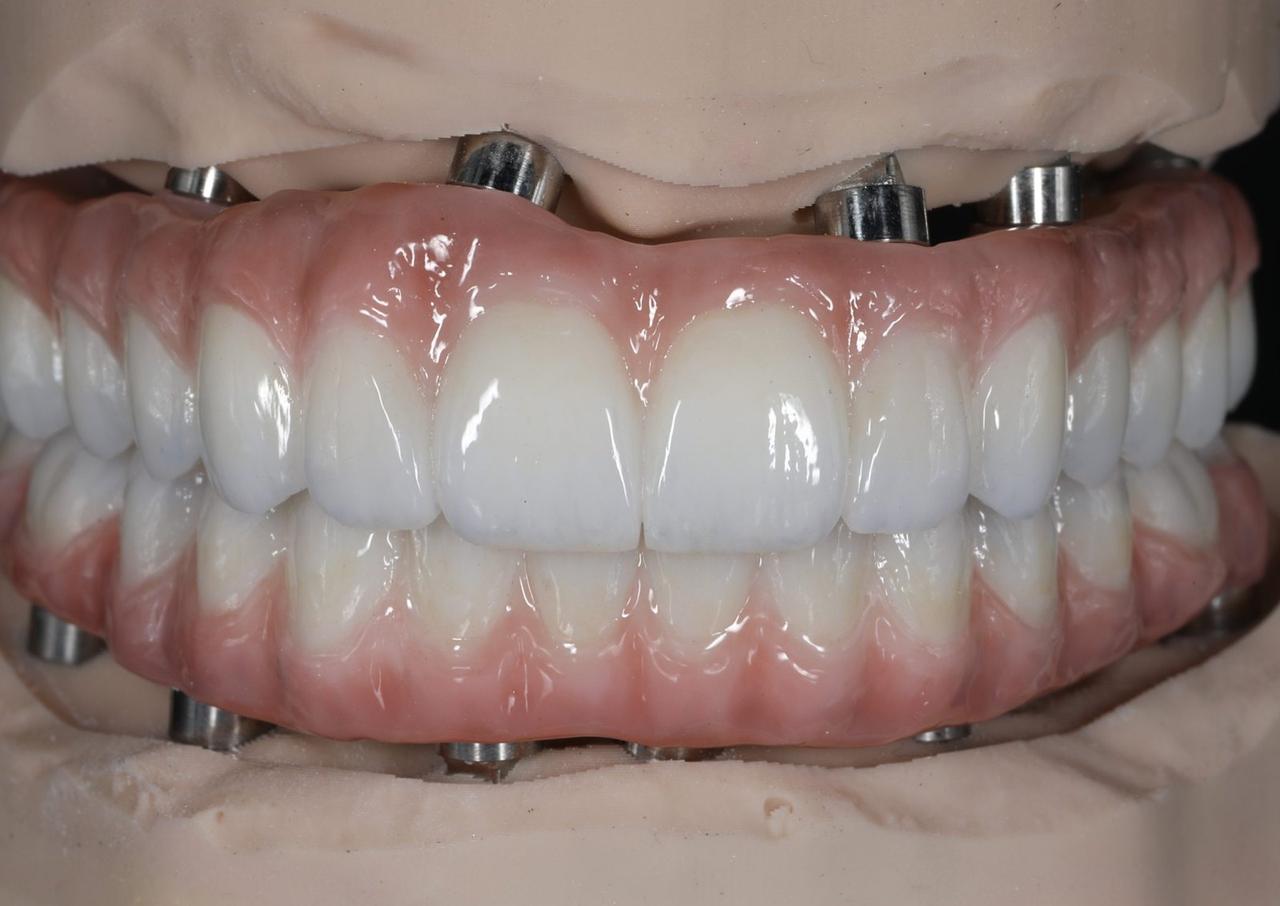
- Screw-retained and cement-retained implant crowns, with custom titanium and zirconia abutments, for all major implant systems, including Nobel Biocare, Straumann, Zimmer and Osstem.
- Every case is designed and finished by Vasyl Hryn, a dentist and CDT with 17 years at the bench. You talk to the person who makes the crown.
- Scans from iTero, 3Shape and Medit. We confirm we have received your case within 2 hours, with the delivery date.
- Implant crowns in 5 working days from an accepted scan, shipping not included.
- Photos of the finished crown for your approval on WhatsApp before it ships.
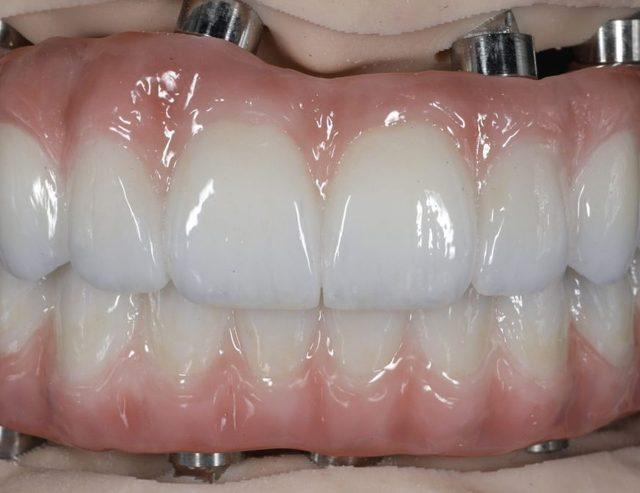
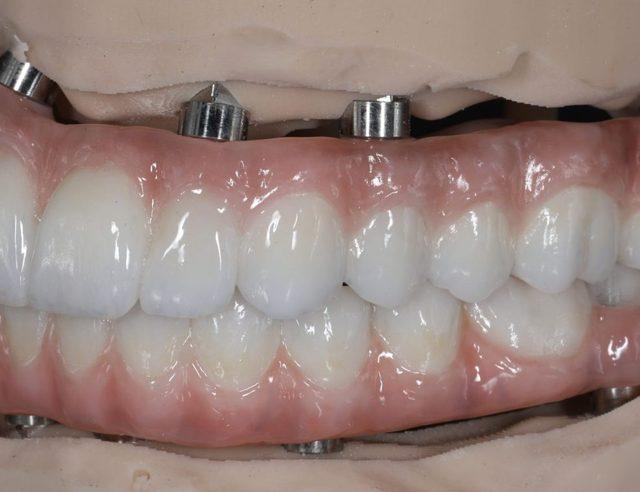
More on our implant crowns and abutments, on zirconia and e.max crowns, and on All-on-X full-arch cases. Finished work is on the cases page.
Frequently asked questions
Is a screw-retained implant crown better than a cemented one?
Not for implant survival: reviews find no significant difference. It is better when the access exits in a hidden spot, because it is retrievable and leaves no cement below the margin. When the access would show on the facial, a cemented crown on a custom abutment is the better choice.
Can an anterior implant crown be screw-retained?
Yes, when the implant is placed so the access exits through the cingulum. If it exits through the facial or the incisal edge, we design a custom abutment and a cemented crown instead.
What should I do if a screw-retained crown comes loose?
Remove the access filling, check the screw and the seating, replace the screw if it is damaged, and retighten to the manufacturer's torque. A crown that keeps loosening usually points to an occlusal or fit problem: send us a photo and a scan and we will look at it with you.
What do I send Grin for an implant crown?
An intraoral scan with the correct scan body (iTero, 3Shape or Medit), the opposing arch and a bite, the implant system and platform, your retention preference and the shade. Call or message Vasyl at +1 (415) 425-9175 if you want to talk the case through first.
Try us on one case
The fairest way to judge a lab is one case. Send us a single unit, a crown or a veneer, as a free trial case, and talk it through with Vasyl directly. Send us a message or call +1 (415) 425-9175.
About the author
Dentist and CDT · 17 years at the bench · makes every case himself
Vasyl Hryn is a dentist and a Certified Dental Technician (CDT) with 17 years at the bench. He leads Grin Dental Lab at 500 Sutter Street in San Francisco, where he designs and finishes every case himself: implant crowns, e.max veneers and All-on-X full-arch zirconia, for dentists only.
Sources
- Sherif S. et al. A systematic review of screw- versus cement-retained implant-supported fixed restorations. J Prosthodont. 2014;23(1):1-9.
- Wilson TG Jr. The positive relationship between excess cement and peri-implant disease: a prospective clinical endoscopic study. J Periodontol. 2009;80(9):1388-92.
- Linkevicius T. et al. The influence of margin location on the amount of undetected cement excess after delivery of cement-retained implant restorations. Clin Oral Implants Res. 2011;22(12):1379-84.