How to Choose the Best Dental Lab for Your Practice: 7 Criteria and How to Check Each
A lab you will work with for years is chosen on things you can check before the first case: who makes the work, where, who you talk to, and what happens when something is wrong. Here is what to ask, and where to verify the answer.
Key takeaways
To choose a dental lab for the long term, check seven things before the first case: certified technicians (CDT, verifiable at nbccert.org), where the work is actually made, who answers when you call, the remake policy in writing, real turnaround, which scanners it accepts, and how it does on one trial case.
- Dental labs are not required to be certified in most states, so certification is something you check, not something you assume.
- Ask in writing where your cases are made and whether any part is subcontracted. ADA policy says the lab should tell you.
- The best test of a lab is one real case, judged on fit, shade and how the lab talked to you along the way.
Why the choice of lab matters for years
Most practices change labs rarely and for one of three reasons: a missed deadline, a remake that cost chair time, or not being able to reach anyone who knows the case. Each of these can be checked before you commit. A lab that is right for single posterior crowns may not be right for anterior esthetics or full arch, so check the lab against the work you actually send.
The checklist: 7 criteria and how to verify each
| Criterion | What to ask | How to verify |
|---|---|---|
| 1. Certification | Who on staff is a CDT? Is the lab a CDL? | NBC directories of CDTs and CDLs at nbccert.org |
| 2. Where it is made | Where are my cases designed and finished? Is any step subcontracted? | Written answer from the lab; for work made abroad, the foreign lab's FDA registration |
| 3. Who you talk to | Who picks up when I call about a case in progress? | Call the lab's main number before you send a case |
| 4. Remake policy | What is covered, how fast, and who decides? | The policy in writing, before the first case |
| 5. Turnaround | How many business days, and from what moment? | Track it on your trial case |
| 6. Scanners | Which intraoral scanners and file types do you accept? | Send a test scan from your own scanner |
| 7. Trial case | Can I send one case to test you? | Judge fit, shade, contacts and communication |
1. Certification: CDT and certified dental lab (CDL)
The National Board for Certification in Dental Laboratory Technology (NBC) runs two voluntary programs. A Certified Dental Technician (CDT) has passed NBC's exams and must renew every year with at least 12 hours of continuing education. A Certified Dental Laboratory (CDL) has met NBC standards for quality assurance and safety and must employ at least one CDT.
NBC itself notes that most state dental practice acts do not set standards for dental labs, and that domestic labs remain unregulated in more than 40 states. Certification is one of the few outside checks you have. Ask for names, then look them up in the CDT and CDL directories on nbccert.org.
2. Where the work is actually made
A lab with a local address can still design, mill or finish part of the work elsewhere. ADA policy says the laboratory should tell the dentist which materials are in the case and about any subcontracting laboratory used to prepare it, and some states require written point-of-origin disclosure.
If any of your work is made abroad, the foreign manufacturer must be registered with the FDA, and you can look it up in FDA's registration and listing database. Ask the lab for the name and country of any subcontractor, and keep the answer with your records.
3. Who answers the phone
Call the lab before you send anything. Does someone who can see your case pick up, or does the call go to a queue? For anterior and full-arch work, you will want to talk shade, contacts and prosthetic space with someone who works on the case.
4. Remake policy, in writing
Every lab remakes cases; what matters is how. Ask what counts as a lab error, how fast a remake ships, and whether a shade change at try-in is covered. Get it in writing before the first case, not after the first problem.
5. Turnaround you can plan around
Ask for turnaround in business days and when the clock starts: when the impression arrives, or when the scan is accepted. Full-arch cases usually take longer than single units. Then compare the promise with the date your trial case actually arrives.
6. Scanners and file formats
Most labs take iTero, 3Shape and Medit scans, but confirm your own scanner and whether open STL files are accepted. A test scan before a real case saves a lost appointment.
7. One trial case before you commit
Send one crown or veneer you know well. Judge the fit, contacts, shade and margins, and just as much how the lab communicated: did they call with a question, send photos, deliver on the day they said?
What's new in the industry and what it means for you
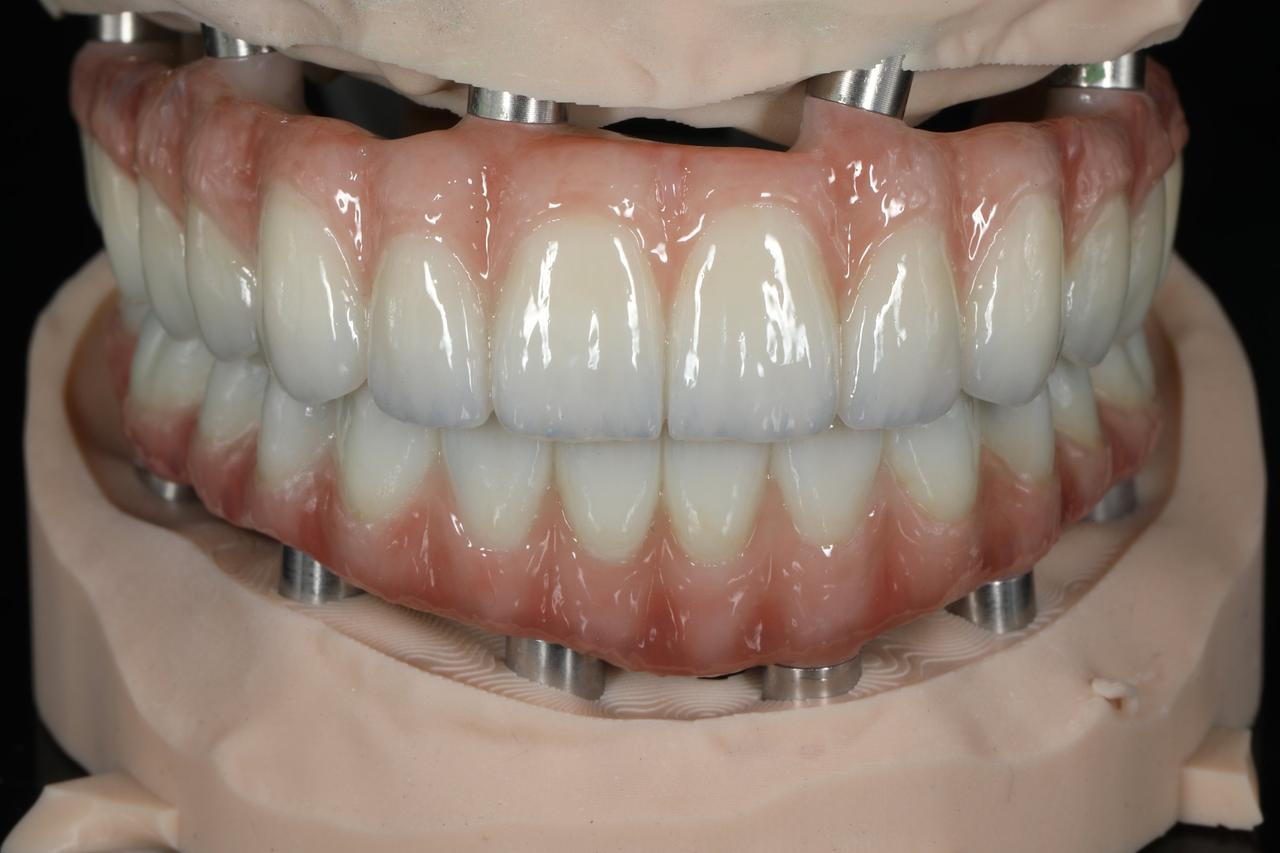
FDA clears robotic guidance for pterygoid implants. On October 29, 2026 Neocis announced FDA 510(k) clearance for its Yomi S robot and YomiPlan software to support pterygoid implant placement, which the company says can avoid a sinus lift for some full-arch patients with severe maxillary resorption. What it means for you: more complex full-arch cases, where agreeing implant positions and prosthetic space with the lab before surgery matters even more. See how we handle All-on-X full-arch cases.
More iTero scanners in practices. Align's Q3 2026 results (October 28) report more than 157,000 iTero systems worldwide, with units placed up double digits year over year. What it means for you: confirm that the labs you work with accept your scans directly, without re-scanning or file conversion.
Frequently asked questions
Do dental labs have to be certified?
No. In most US states dental labs do not need certification. NBC's CDT and CDL programs are voluntary, which is why it is worth checking which technicians and labs hold them.
What is the difference between a CDT and a CDL?
A CDT is a person: a dental technician certified by NBC who renews every year with continuing education. A CDL is a laboratory that meets NBC standards for quality and safety and employs at least one CDT.
How do I know if my dental lab outsources overseas?
Ask in writing where each step is done and whether any part is subcontracted. ADA policy says the lab should tell you about any subcontracting laboratory, and work made abroad must come from an FDA-registered foreign manufacturer.
How many cases should I send a new lab before deciding?
Start with one trial case you know well, such as a single crown or veneer. If fit, shade and communication are right, move to more cases and then to complex work.
How we work at Grin Dental Lab
- A boutique lab for dentists only at 500 Sutter Street in San Francisco, founded by Vasyl Hryn, CDT, 17 years at the bench.
- Crowns, implant crowns, veneers and bridges in 5–7 business days; full-arch cases in 10–14 business days, from an accepted scan.
- A free remake within 48 hours on a lab error.
- Scans from iTero, 3Shape and Medit, or any STL file.
See our veneer package, implant crowns and abutments, finished work on the cases page, and our guide to screw-retained vs cement-retained implant crowns.
Book a free consultation with our lab
Talk a case, a material choice or your scan workflow through with our lab before you send anything. The consultation is free, for dentists. Pick a time, call +1 (415) 425-9175 or message us on WhatsApp. After the consultation, your first crown or veneer is on us.
- Free consultation, then your first crown or veneer on us
- 5–7 business days
- iTero, 3Shape, Medit or STL
- Free remake within 48 hours on a lab error
Sources
- National Board for Certification in Dental Laboratory Technology: What dentists should know about certification (CDT and CDL directories)
- Inside Dental Technology, January 2020: "Taking Action" (ADA policy on dental laboratory registration and disclosure)
- US Food and Drug Administration: Who must register, list and pay the fee (medical devices)
- GlobeNewswire, October 29, 2026: Neocis expands Yomi S clearance to include pterygoid implant placement
- Align Technology, October 28, 2026: Third quarter 2026 financial results
About the author
CDT · 17 years at the bench · founder of Grin Dental Lab
Vasyl Hryn is a Certified Dental Technician (CDT) with 17 years at the bench and the founder of Grin Dental Lab, a boutique lab for dentists only at 500 Sutter Street in San Francisco. Grin Dental Lab makes implant crowns, e.max veneers and All-on-X full-arch zirconia.